
Hreflang implementation is a core technical requirement for any multilingual or multi regional website targeting international markets. A correct hreflang implementation ensures that search engines understand the relationship between language and country specific URLs and serve the most relevant version to users. This guide explains how to implement hreflang tags properly using the HTML head, XML sitemap, or HTTP headers, and how to avoid common configuration errors that weaken international SEO performance. You will learn how to set up rel alternate hreflang attributes, apply valid ISO language and country codes, configure self referencing and return tags, and align hreflang with canonical signals. We also cover hreflang x default usage, sitemap implementation, and step by step instructions to implement hreflang correctly across multilingual websites. Whether you are managing subfolders, subdomains, or country code top level domains, this hreflang implementation guide provides a structured framework to implement hreflang tags accurately and validate the setup using a hreflang checker to ensure full compliance with search engine guidelines.
What Is Hreflang Implementation in SEO
Hreflang implementation refers to the technical process of adding hreflang attributes to web pages so search engines can identify language and regional targeting. The hreflang tag is defined using the rel=”alternate” attribute with a hreflang value that specifies language or language and country combinations.
Search engines use hreflang implementation to group alternate URLs into clusters. Each cluster represents the same content adapted for different languages or regions. Without correct implementation, search engines may treat these versions as duplicate content or display the wrong regional page in search results.
Proper hreflang implementation is essential for international SEO because it directly influences how Google, Bing, and Yandex interpret multilingual targeting signals.
Best Ways to Implement Hreflang Tags
There are three primary methods to implement hreflang tags. Each method is valid when configured correctly.
Hreflang HTML Tag Implementation
The most common method is implementing the hreflang HTML tag in the head section of each page. The structure uses the link rel alternate attribute:
<link rel="alternate" hreflang="en" href="https://example.com/en/" />
Each language or regional page must include:
- A self referencing hreflang tag
- Alternate hreflang references to all other versions
- Absolute URLs
- Consistent protocol and domain
The hreflang HTML implementation requires that every page in the cluster references all other alternate pages. This ensures proper return tags and prevents hreflang conflicts.
This method is suitable for small to medium multilingual websites where direct control over HTML templates is available.
Hreflang Implementation in XML Sitemap
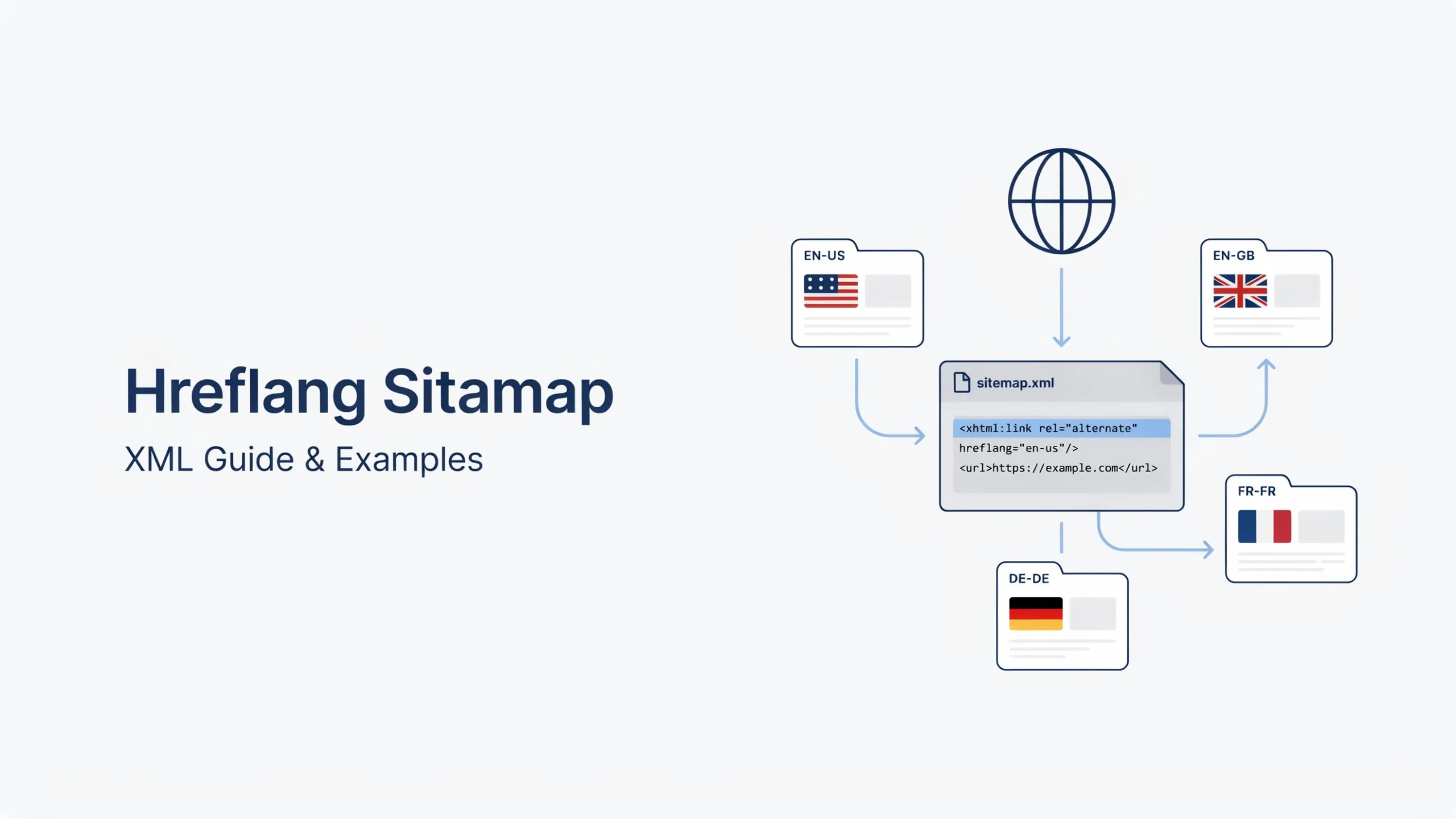
For large websites, hreflang sitemap implementation is often more scalable. Instead of placing hreflang tags in HTML, alternate references are defined in the sitemap XML file using xhtml link elements.
Hreflang sitemap XML implementation centralizes alternate URLs and reduces page level complexity. It is particularly useful for ecommerce platforms and enterprise international websites with thousands of localized URLs.
When implementing hreflang in sitemap XML, ensure:
- All alternate URLs are listed correctly
- The sitemap includes consistent hreflang clusters
- Pages return a 200 HTTP status
- The sitemap is updated whenever new language versions are added
This approach simplifies maintenance while preserving accurate hreflang signals.
Implement Hreflang Tag via HTTP Headers
Hreflang can also be implemented using HTTP headers. This method is commonly used for non HTML files such as PDFs or dynamically generated content.
In this case, the server sends rel alternate hreflang signals in the HTTP response header. The same principles apply: self referencing, return tags, valid language codes, and accessible URLs.
Although less common, HTTP header implementation is effective when HTML modification is not feasible.
Step by Step How to Implement Hreflang
A structured hreflang implementation process reduces technical errors.
- First, identify all language and regional URLs that contain equivalent content. Map the relationships clearly before deployment.
- Second, define correct ISO 639-1 language codes and ISO 3166-1 country codes. Use combinations such as en US, en GB, es ES, or de DE when regional targeting is required.
- Third, add self referencing hreflang tags on each page. Every URL must reference itself.
- Fourth, add alternate hreflang references linking to all other versions in the cluster.
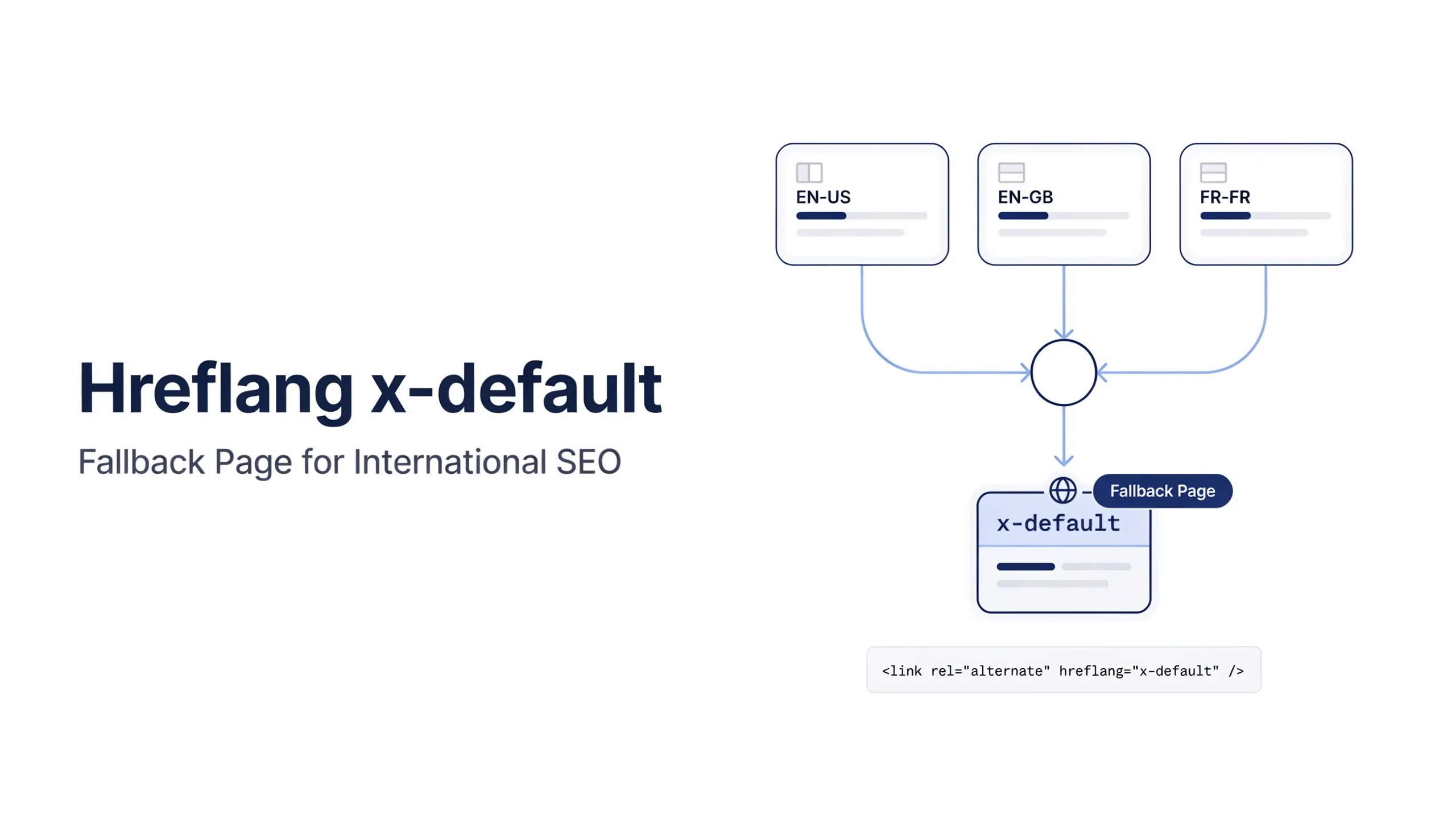
- Fifth, include hreflang x default if you have a global fallback page or language selector.
- Sixth, verify return tags. Each page must reference and be referenced by other alternate versions.
- Seventh, ensure canonical tags align with hreflang signals. Canonical vs hreflang conflicts can invalidate implementation.
Finally, validate the configuration using a hreflang validator to detect errors and confirm proper implementation.
Hreflang Language and Country Code Format
Correct hreflang implementation depends on valid language and region codes. Language codes follow ISO 639-1 standards and use two letter formats such as en, fr, de, or es. Region codes follow ISO 3166-1 standards and use two uppercase letters such as US, GB, CA, or AU.
A combined language region format appears as en US or fr CA. Incorrect formats, unsupported codes, or malformed attributes cause hreflang validation errors.
Always ensure consistent capitalization and formatting to maintain accurate hreflang attribute configuration.
Self Referencing and Return Tags Explained
Self referencing hreflang means that a page includes a hreflang tag pointing to its own URL. This is mandatory for a complete cluster.
Return tags refer to the reciprocal relationship between alternate pages. If Page A references Page B, Page B must also reference Page A.
Missing return tags create hreflang issues and prevent search engines from grouping alternate URLs correctly. Ensuring bidirectional linking within each cluster is a fundamental requirement of hreflang implementation.
Hreflang and Canonical Tag Configuration
Hreflang and canonical tags must work together without conflict. The canonical tag defines the preferred version of a page, while the hreflang tag defines alternate language or regional versions.
If canonical signals point to a different URL outside the hreflang cluster, search engines may ignore hreflang attributes. A correct configuration requires that canonical URLs remain within their respective language versions and do not override alternate hreflang signals.
Understanding canonical vs hreflang behavior is critical in multilingual SEO architecture.
Common Hreflang Implementation Mistakes
Several hreflang errors frequently occur during implementation:
- Missing self referencing hreflang tags
- No return tags between alternate URLs
- Invalid language or region codes
- Redirected alternate URLs
- Non indexable pages marked with noindex
- Mixed HTTP and HTTPS versions
- Relative URLs instead of absolute URLs
- Missing hreflang x default
These hreflang implementation mistakes weaken international SEO performance and should be identified using a hreflang validation tool.
How to Validate Hreflang Implementation
After deployment, always validate hreflang tags using a reliable hreflang checker. A hreflang validation tool analyzes alternate URLs, HTTP status codes, indexability, language codes, and return tags.
Testing hreflang implementation ensures that clusters are complete, valid, and aligned with search engine guidelines. Regular validation is recommended whenever new languages or regional pages are added.
Hreflang Implementation Best Practices
For stable multilingual SEO performance, follow these best practices:
- Use correct ISO language and country codes
- Maintain complete hreflang clusters
- Ensure self referencing and return tags
- Align canonical and hreflang signals
- Keep sitemap hreflang entries updated
- Verify HTTP status and indexability
- Test using a hreflang checker after changes
A structured and validated hreflang implementation strengthens international SEO, improves regional targeting, and ensures that the correct language version appears in search results across global markets.